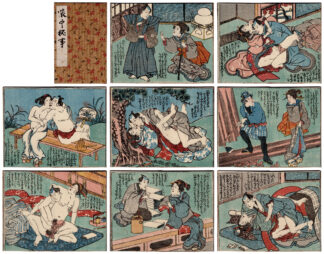
If you are looking at Japanese erotic woodblock prints for the first time, the exaggerated proportions of the genitalia are not a mistake—they are a deliberate artistic convention used to express passion, vitality, and humor.
In traditional shunga (“spring pictures”), artists never aimed for photographic realism. Instead, they distorted anatomy to guide the viewer’s eye and amplify the emotional intensity of the scene. Here are the five historical and artistic reasons behind this iconic stylistic choice.
1. Influence from Chinese medical and sexual manuals
Long before the rise of Edo-period woodblock prints, early Japanese erotic painting was deeply influenced by illustrated Chinese medical and “bedroom art” (fangzhong shu) treatises imported during the Muromachi period (1336–1573). In these instructional manuals, sexual organs were drawn on an oversized scale to clearly illustrate anatomy and the flow of vital energy (qi). Japanese artists and audiences found this bold visual exaggeration captivating, adopting it as a foundational convention of erotic art.
2. Visual focus and emotional intensity
In Japanese woodblock printing (ukiyo-e), artists frequently used visual exaggeration to highlight what mattered most in a composition. Just as kabuki actors were drawn with dramatic expressions and oversized hands to convey power, enlarged genitalia acted as a visual focal point, immediately signaling the central theme of desire and intimacy.
3. Humor and playfulness (warai-e)
Historically, shunga were also known as warai-e, which literally translates to “laughing pictures.” Rather than treating sexuality as something solemn or taboo, Japanese artists approached it with lightheartedness, wit, and theatrical exaggeration. Oversized anatomy added a comic, celebratory spirit that made these prints entertaining to share among couples and friends.
4. Symbols of fertility and good fortune
In traditional Japanese culture, explicit imagery was closely tied to wishes for abundance, fertility, and household prosperity. Exaggerated sexual organs symbolized life energy and vitality, which is why shunga albums were often given as wedding gifts or kept in homes and samurai armor chests as protective talismans.
5. Balancing the composition with elaborate robes
In ukiyo-e prints, figures are rarely completely naked. Most scenes depict lovers partially wrapped in heavy, richly patterned silk kimonos and layered bedding. If the genitalia had been drawn to realistic scale, they would have been visually lost among the bold geometric patterns of the fabrics. Enlarging them ensured that the human connection remained the unmistakable centerpiece of the artwork.
Far from being crude, these exaggerated proportions reflect a sophisticated visual language that blended medicine, humor, and symbolism—a hallmark of the great masters you can explore directly in our shunga catalog.